
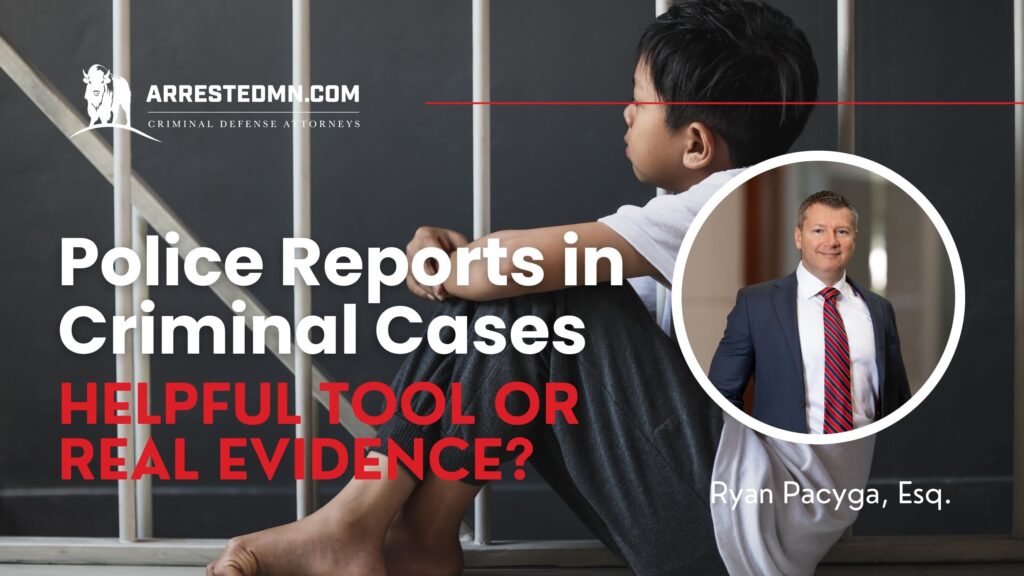
If you are a parent or grandparent, there are few things more terrifying than getting a call that a child in your family has done something that “could be a crime.”
You picture handcuffs. Courtrooms. Judges. A record that follows them forever.
In Minnesota, the rules for very young kids have changed in a major way. As of August 1, children under 13 are no longer brought into juvenile delinquency court for what would otherwise be crimes. That sounds like a relief, but it also raises a hard question:
If the courts are not handling it, what actually happens to a 10, 11, or 12 year old who breaks the law?
This change is not just a technical update. It is a shift in how Minnesota thinks about accountability, childhood, and public safety. Below is what families need to know, and the questions you should be asking if a young child in your life is involved.
What changed in Minnesota’s law?
Under the old system, a child could be brought into the juvenile court system for committing a “delinquent act.” That meant:
- A 10, 11, or 12 year old could be treated as a juvenile delinquent
- The case would go through juvenile court
- Judges could impose conditions, probation, treatment and other consequences
As of August 1, that has changed.
If a child is under 13, they are no longer treated as a delinquent child under Minnesota law for purposes of juvenile delinquency proceedings. In most situations, their conduct is now routed through the social services system instead of juvenile court.
That does not mean nothing happens. It means the system handling it is different.
If a child under 13 cannot be prosecuted, what actually happens?
When a 10, 11, or 12 year old engages in behavior that would be a crime for an adult, several things can still occur:
- Law enforcement can respond. Police can still be called, still come to the scene, still talk to the child and family, and still make reports.
- Parents and guardians are still involved. Authorities can notify and work with the child’s family.
- Social services steps in. County or state social services can become involved to assess the situation, offer services, and, if needed, take protective or corrective actions.
- There can be consequences and interventions. These may include counseling, mental health services, family support, education plans, safety plans, or other interventions.
What is changing is the fundamental approach:
Minnesota is saying that children under 13 should not be processed through juvenile delinquency court. Instead of asking “How do we punish this child,” the law is pushing the system to ask “What intervention does this child and family need right now to change the child’s path?”
The tension between accountability and childhood
This change sits on top of two competing but legitimate concerns.
1. Accountability and public safety
If a 12 year old commits a serious act of violence, people reasonably want to know:
- Who is going to take this seriously?
- What protections exist for victims and the community?
- Will there be real consequences?
That is a fair concern. Families of victims and communities deserve safety and clear responses.
2. Recognizing that kids are not adults
On the other side, there is a hard reality about child development:
- A 10, 11, or 12 year old does not think like an adult
- Their impulse control is different
- Their ability to grasp long term consequences is different
Brain science has been clear on this for years. The United States Supreme Court has cited this research in cases restricting harsh punishments for juveniles, noting that children have “diminished culpability and greater prospects for reform.”
Even the juvenile court system was built on the idea that kids are different from adults and should be treated more rehabilitatively than punitively.
Minnesota’s new rule takes that idea a step further for the youngest group of kids, effectively saying:
For children under 13, the criminal process is not the right tool.
How is this different from the old juvenile system?
Juvenile court has always been more rehabilitative on paper than adult court. It has focused more on treatment, services, and second chances, even though consequences and detention are still possible.
The new law is even more lenient in structure for kids under 13 because:
- They are not labeled juvenile delinquents for these acts
- They are not processed through juvenile delinquency court
- Their cases are more likely to be handled through child protection and social services systems
That sounds kinder, but it leads to a crucial question:
If we are taking kids out of the courtroom, are we actually replacing that with real intervention, or are we just doing less?
The real test: what happens next for these kids?
From the perspective of a criminal defense lawyer who sees people at all stages of life, one thing becomes clear very quickly:
Adults do not usually wake up at 25 and suddenly decide to live a criminal lifestyle out of nowhere.
There are often warning signs much earlier:
- Serious misconduct in late childhood or early teens
- Repeated behavior at school or at home
- Unaddressed trauma, addiction, mental health, or family instability
Some juveniles go through the system once or twice, receive help and accountability, and never come back. Others build a long juvenile history and then show up in adult court with habits and trauma that were never meaningfully addressed.
So the real test of this new Minnesota law will not be whether it feels kinder in the moment. It will be:
Are we actually getting the child and family the intervention they need right now, or are we just avoiding court paperwork?
If the alternative to juvenile prosecution is nothing meaningful, that is not a solution for anyone:
- Not for the child
- Not for the family
- Not for future victims
- Not for public safety
Is Minnesota running an experiment?
In a sense, yes.
Minnesota is:
- Moving away from criminal prosecution of very young children
- Moving toward intervention through child protection and social services
The big questions over the next several years will be:
- Will social services have the resources and authority to provide real accountability and reform?
- Will there be strong enough interventions for serious misconduct?
- Will this approach reduce the number of kids who later become adult defendants?
Right now, no one can honestly claim to know the answer. It will take time and real data to see how this plays out.
What we do know is that our measure of success should not be “Did we punish this child?”
It should be “Did we prevent this child from becoming an adult defendant later?”
That is a far more important and humane metric for families and communities.
What this means if your child is under 13 and in trouble
If a child in your family is under 13 and engaged in serious misconduct, here is what this shift should prompt you to think about:
- Take it seriously even if the court is not involved. The absence of a delinquency petition does not mean the issue can be ignored.
- Ask who is coordinating intervention. Is social services involved? Is there a clear plan? Are mental health or educational supports in place?
- Watch for gaps. Systems can miss things. Children can fall through cracks between agencies. You may need to push for services and clarity.
- Get legal advice early. Even if the child is under 13, there can be long term consequences for the family, future cases, or child protection involvement. A lawyer can help you understand those risks.
The stakes are not only about what happens this week. The stakes are about whether this moment becomes a turning point for a better path, or simply a warning sign that gets ignored until the child shows up in adult court years later.
If your child is in trouble, you do not have to navigate this alone
If your child or a young family member is under 13 and has been involved in something serious, you may be caught between two fears:
- Fear of your child being pulled into the system
- Fear of nothing meaningful being done and things getting worse later
You do not have to sort that out on your own.
At Pacyga Trial Lawyers, we work with families to:
- Explain how these new rules on age and criminal responsibility apply in real life
- Understand what law enforcement, social services, and schools can and cannot do
- Protect your child’s rights and future while still taking misconduct seriously
- Advocate for interventions that actually help instead of simply labeling
If you are facing this situation and need to understand your options, call 612‑339‑5844 to speak with our team. We can help you see the road ahead more clearly, protect your child’s legal interests, and push for the kind of response that makes your child’s future safer instead of more fragile.