
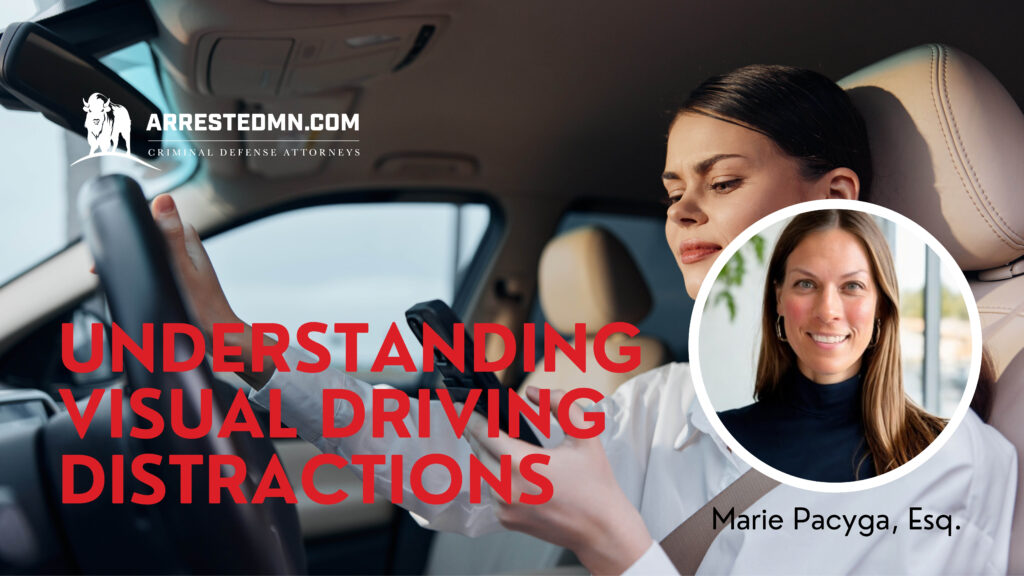
April is Distracted Driving Awareness Month, which makes it a good time for drivers and parents to revisit how distraction really works behind the wheel. New drivers are hearing more about distracted driving in their training, but many adults have not reviewed these risks since they first earned a license.
At Ryan Pacyga Criminal Defense, the focus is often on what happened in the seconds before a crash. In many serious cases, distraction plays a central role. Understanding how visual distractions work is not only important for safety. It can also be critical evidence in a criminal case after a collision.
The three types of distraction
Traffic safety experts generally group distracted driving into three main categories:
- Visual distraction
- Manual distraction
- Cognitive distraction
All three matter, and they often appear together in real life. This article focuses on visual distraction, because it is one of the most common and most easily overlooked.
What is a visual distraction?
A visual distraction is anything that causes a driver to take their eyes off the road, even for a moment. Many drivers think of texting first, but the law and the science are broader than that.
Common examples include:
- Reading or following a navigation app on a phone or dashboard screen
- Looking at a passenger in another seat while talking
- Watching a video or scrolling social media
- Looking at something outside the car, such as a traffic stop, crash scene, billboard, or roadside event
- Searching for a dropped item or looking down to adjust climate controls or music
Research from the Virginia Tech Transportation Institute has found that taking eyes off the road for just two seconds doubles the risk of a crash. Looking away for longer than that sharply increases the odds of a serious or fatal collision.
(Source: VTTI, 100 Car Naturalistic Driving Study)
Why visual distractions are so dangerous
Driving is a constant stream of changing information. Other vehicles brake, merge, or change lanes. Pedestrians step off curbs. Traffic lights change. Road conditions shift without warning.
When a driver looks away from the road, even briefly, they may:
- Miss early warning signs, such as brake lights or a pedestrian starting to cross.
- Lose time to react. At 55 miles per hour, a vehicle travels about the length of a football field in five seconds.
- Drift into another lane or onto the shoulder without realizing it.
- Overcorrect when they look back up, which can cause a secondary loss of control.
For criminal cases that follow a serious crash, these details matter. Prosecutors and defense attorneys both look closely at what the driver was doing in the moments before impact.
How visual distraction can affect a criminal case
After a serious crash, law enforcement will often ask whether distraction played a role. If someone is seriously injured or killed, the stakes rise quickly. A driver may face charges that can include criminal vehicular operation or related offenses under Minnesota law, depending on the facts.
Investigators and attorneys may consider:
- Cell phone use
- Phone records to see whether calls, texts, or app use occurred around the time of the crash
- Data from the phone or vehicle infotainment system
- In vehicle behavior
- Witness statements about the driver looking down, turning around, or focusing on a passenger
- Statements from passengers inside the vehicle
- Roadside conditions
- Whether the driver was looking at a previous crash, traffic stop, or other event
- Whether something outside the car may have reasonably drawn attention
- Inconsistent accounts
- Differences between what the driver says and what other evidence shows
- Gaps in memory that may be tied to distraction or impact
If visual distraction is suspected, a proper investigation is essential. Evidence about distraction can:
- Strengthen the prosecution’s case if it appears the driver was ignoring obvious risks
- Support the defense if the evidence does not match the initial assumption of distraction
- Change how fault is allocated among multiple drivers involved in the crash
At Ryan Pacyga Criminal Defense, the team looks for every credible source of information, including:
- Police reports
- Body camera footage
- Dash camera footage from any involved vehicles
- Surveillance video from nearby businesses or homes
- Cell phone records and data, when available
- Statements from passengers and independent witnesses
The goal is to build a complete and accurate picture of what really happened, not just what it looked like at first glance.
Why drivers should care about visual distraction even if no one is hurt
Many drivers think serious legal trouble only comes after a bad crash. That is not always true. In Minnesota and many other states, unsafe or distracted driving can still lead to traffic citations, higher insurance costs, and a record that follows a driver for years.
Avoiding visual distractions helps:
- Prevent serious injury or death to yourself, your passengers, and others
- Reduce the odds of being charged with a traffic or criminal offense
- Protect your driving record and insurance rates
- Avoid putting your word against a police report or a witness statement later
For parents of teen drivers, this is also a chance to set expectations early. Teens are learning not only how to handle a vehicle, but also how to manage phones, friends, and pressure while driving. Clear rules about phones, music, and passengers can lower the risk of a first crash and a first court appearance.
Practical steps to limit visual distractions
Drivers can take simple actions to stay visually focused on the road:
- Set navigation before the vehicle moves, and pull over safely if a route change is needed.
- Place the phone out of reach, or use a true hands free setup that does not require looking down.
- Agree that longer conversations with passengers will wait until the vehicle is parked.
- Avoid adjusting music, climate, or other controls while in heavy traffic or at higher speeds.
- Refuse to look at crash scenes or roadside activity while driving. Curiosity is natural, but safety has to come first.
These habits protect everyone on the road and can also prevent the kind of evidence that leads to criminal charges after a collision.
When to contact a criminal defense attorney
If you are involved in a crash and there is any suggestion that distraction played a role, it is important to get legal guidance right away. This is especially true if:
- Someone was seriously injured or killed
- Law enforcement is asking detailed questions about your phone or what you were looking at
- Officers want to search your phone, vehicle, or other devices
- You are worried about criminal charges or a permanent record
A criminal defense attorney can:
- Review the facts and explain your rights
- Assess whether distraction is being fairly or unfairly blamed
- Work with investigators and experts to analyze phone records, cameras, and other data
- Protect you in interviews with law enforcement
- Build a defense strategy tailored to your case
At Ryan Pacyga Criminal Defense, cases are approached with a detailed focus on what really happened in the seconds and minutes before impact. Visual distraction may be part of that picture, but it is rarely the whole story. Evidence needs to be collected and analyzed carefully before conclusions are made.
Closing
Visual distractions are a daily reality on modern roads. Navigation apps, social media, passengers, and roadside events all compete for a driver’s attention. During Distracted Driving Awareness Month and throughout the year, staying focused on the road is one of the most powerful steps a driver can take to avoid harm and legal trouble.
If you or someone you care about is facing potential criminal charges after a crash where distraction is being discussed, do not try to sort it out alone. Early legal advice can make a major difference in how evidence is gathered and how your story is told.
To discuss a specific situation confidentially, contact Ryan Pacyga Criminal Defense. The team can help you understand your options and protect your future.