
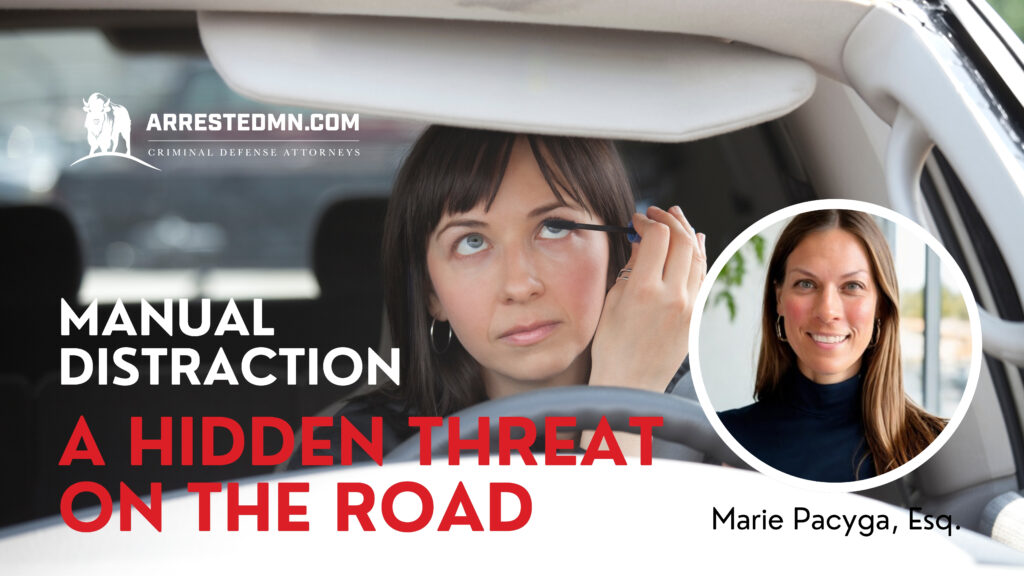
Manual Distraction: A Hidden Threat on the Road
April is Distracted Driving Awareness Month, which makes it a good time to look closely at one of the most overlooked but dangerous behaviors on the road: manual distraction.
Most people think of distracted driving as texting behind the wheel. That is part of the problem, but it is only one example of a broader category called manual distraction. Understanding what manual distraction is, how it causes crashes, and how it shows up in real cases can help you protect yourself and your rights after a collision.
What is manual distraction?
Distracted driving is generally grouped into three types:
- Visual distraction: taking your eyes off the road
- Manual distraction: taking your hands off the wheel
- Cognitive distraction: taking your mind off driving
This article focuses on the second type, manual distraction.
Manual distraction happens any time a driver physically removes one or both hands from the steering wheel for a non driving task. Common examples include:
- Reaching down to pick up something that fell on the floor
- Adjusting in dash navigation or audio controls
- Texting or scrolling on a phone
- Eating or drinking while driving
- Applying makeup or grooming
- Reaching into the back seat to hand something to a child or passenger
Individually, these can seem minor or harmless. In reality, they create a critical gap in control at the exact moment the driver needs both hands and full attention on the road.
Why manual distraction is so dangerous
At highway speeds, even a short distraction can have severe consequences.
According to the National Highway Traffic Safety Administration (NHTSA), sending or reading a text takes a driver’s eyes off the road for about 5 seconds. At 55 miles per hour, that is enough time to travel the length of a football field without looking where you are going. During that time, a driver may drift out of the lane, miss a slowing vehicle ahead, or fail to see a pedestrian or cyclist entering the roadway.
Manual distraction is dangerous because it often combines:
- Hands off the wheel
- Eyes off the road
- Attention split between driving and another task
This combination greatly increases the risk of:
- Rear end collisions
- Lane departure and sideswipe crashes
- Running red lights or stop signs
- Failing to yield to pedestrians or bicyclists
NHTSA data has consistently shown that thousands of people are killed each year in crashes involving distracted drivers, and hundreds of thousands more are injured. Manual distraction is a significant part of that problem.
(Source: National Highway Traffic Safety Administration, “Distracted Driving,” nhtsa.gov)
How manual distraction shows up after a crash
For people injured in a crash, manual distraction is not just a safety issue. It can also be an important factor in proving fault and building a legal case.
Signs that manual distraction may have played a role include:
- The at fault driver admits texting, reaching for something, or adjusting controls
- Witnesses saw the driver looking down or away from the road before impact
- Surveillance or traffic camera footage shows the driver’s behavior
- Phone records indicate texting, social media use, or calls at the time of the crash
- The pattern of the collision suggests delayed braking or no attempt to avoid the impact
In serious and complex cases, an experienced legal team can work with investigators and experts to analyze vehicle data, phone records, and other evidence to show that manual distraction contributed to the collision.
Why this matters for your case
If you were injured by a distracted driver, proving manual distraction can:
- Strengthen your claim that the other driver was negligent
- Help explain why the crash happened and why it was preventable
- Support your right to compensation for medical bills, lost income, and pain and suffering
On the other hand, if you are the one accused of causing a serious crash, allegations of manual distraction can increase the stakes of the case and the potential consequences. In either situation, what happened in the seconds before the collision matters.
How to reduce your own risk
While the law focuses on what happened after a crash, there are straightforward steps every driver can take to reduce manual distraction:
- Set navigation and music before you start driving
- Put your phone on “Do Not Disturb While Driving” or out of reach
- Pull over safely if you need to send a text, make a call, or pick something up
- Avoid eating, personal grooming, or searching for items while driving
- Ask passengers to help with navigation or adjustments when needed
These choices can significantly reduce the risk of causing or being involved in a serious collision.
When to contact a criminal defense firm
Manual distraction is not only a traffic safety concern. In some situations, it can be part of a serious or complex criminal case, especially when a crash results in severe injury or death. Allegations that a driver was texting, reaching for an object, or otherwise distracted can affect everything from charging decisions to potential penalties.
At Ryan Pacyga Criminal Defense, the team understands how distracted driving evidence is gathered, how it is used in court, and how it can affect your future. If you are facing criminal charges connected to a crash where manual distraction is alleged, it is important to get legal help as early as possible.
If you were injured and believe the other driver was manually distracted, or if you are under investigation or charged after a serious crash, reach out right away. An experienced attorney can review what happened, explain your options, and protect your rights at every stage of the case.