
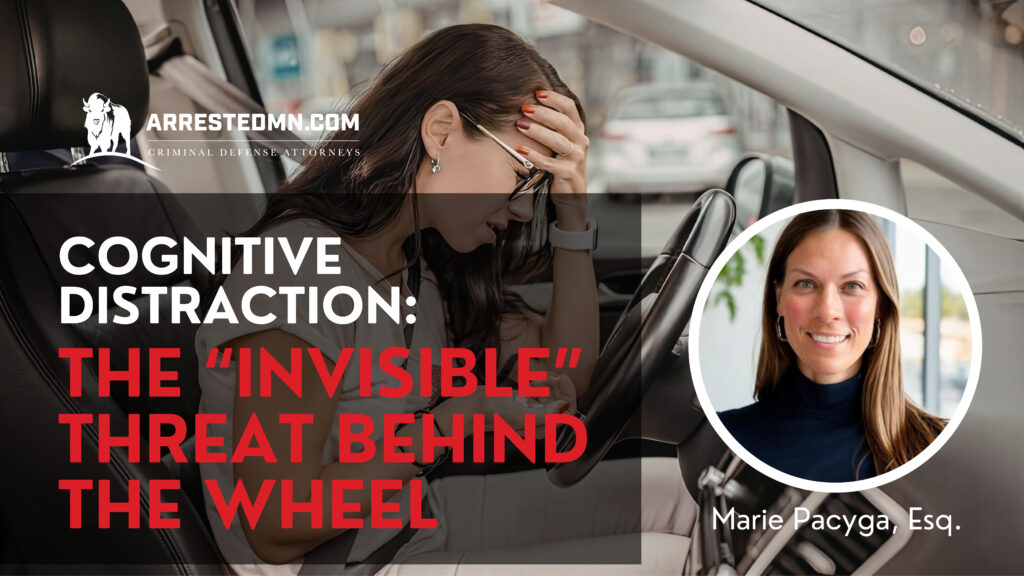
April is Distracted Driving Awareness Month, and most people immediately think of texting, scrolling social media, or adjusting navigation when they hear the phrase “distracted driving.” Those are real dangers, but they are only part of the picture.
There is a third, quieter form of distraction that causes serious crashes every year: cognitive distraction. It does not leave a phone record or a text thread behind, but it can be just as dangerous as looking at your screen.
Injured in a crash that may involve distracted driving? Knowing how distraction really works can help you recognize what happened and protect your rights.
What Is Cognitive Distraction?
Cognitive distraction happens any time your mind is not fully focused on driving, even if your hands are on the wheel and your eyes are on the road.
Common examples include:
- Mentally replaying a difficult conversation from work
- Worrying about bills, family issues, or deadlines
- Planning what to say in an upcoming meeting
- Daydreaming or “zoning out” during a familiar commute
- Getting deeply absorbed in a podcast or heated conversation with a passenger
Many people have had the experience of starting at Point A and suddenly realizing they are already at Point B with little memory of the actual drive. That “autopilot” feeling usually means the brain was somewhere else, not actively engaged in driving.
This is cognitive distraction. It is common and completely human, but when it happens behind the wheel, it can be dangerous.
How Cognitive Distraction Impacts Driving
Driving safely is a complex task that depends on the brain constantly processing information and making decisions in real time. When the mind is busy with something else, the brain has less capacity to:
- Notice changes in traffic or road conditions
- React quickly to sudden hazards
- Judge stopping distance and speed
- Anticipate what other drivers, pedestrians, or cyclists might do next
Research shows that:
- Talking on a hands free phone can create “inattention blindness,” where drivers look at but fail to process up to half of the information in their field of view. The National Safety Council has reported that drivers engaged in phone conversations often miss critical visual cues, even when their eyes are technically on the road.
- In one study published by the AAA Foundation for Traffic Safety, drivers using in vehicle “infotainment” systems remained cognitively distracted for up to 27 seconds after completing a task such as sending a voice text or updating navigation.
- According to the National Highway Traffic Safety Administration (NHTSA), distracted driving of all types contributed to over 3,500 deaths in 2021 in the United States alone. Cognitive distraction is a significant component of that problem, even though it is harder to measure than texting or handheld phone use.
In other words, it is not enough to simply “keep your eyes on the road.” The mind has to be there too.
How Cognitive Distraction Shows Up in Everyday Driving
Many drivers would never dream of texting behind the wheel but still underestimate the effect of mental distraction. Cognitive distraction often looks like:
- Driving on “autopilot” on a familiar route and missing a red light or stop sign
- Late braking because the driver saw a hazard but processed it too slowly
- Drifting within a lane or inconsistent speed without realizing it
- Delayed reaction to a child stepping into the street, a cyclist, or a merging vehicle
- Missing turn signals or brake lights from the car ahead
Because there is no phone in the driver’s hand, crashes caused by cognitive distraction are often harder to recognize and prove after the fact. Yet for the people who are injured, the harm is just as real.
Why This Matters to Potential Clients
After a serious crash, injured people often blame themselves or assume it was “just an accident.” In reality, distraction is a major factor in many collisions, even when it is not obvious.
Understanding cognitive distraction matters because:
- Liability may be broader than it appears. If the other driver was mentally checked out, engaged in an intense conversation, or otherwise cognitively distracted, that can be part of proving negligence.
- Insurance companies may minimize what happened. They often look for simple explanations that reduce their responsibility. Without a careful investigation, cognitive distraction may never be identified or documented.
- Crash victims deserve a full picture. Knowing that distraction could have played a role can help injured people make informed decisions about medical care, documentation, and legal options.
At Ryan Pacyga Criminal Defense, we understand how different forms of distraction show up in real cases and how they intersect with criminal and traffic related charges. When someone is facing criminal allegations or serious traffic related consequences after a crash, the details around distraction can matter.
Practical Ways to Guard Against Cognitive Distraction
Cognitive distraction cannot be eliminated completely, but it can be reduced. Small habits can meaningfully lower risk:
1. Recognize your own “red flags.”
If you notice you have no memory of part of your drive, or you missed an obvious cue like a turn, that is a sign that your mind is doing too much off road work.
2. Keep emotionally heavy conversations off the road.
If possible, avoid intense phone calls or difficult discussions with passengers while driving. Save them for when the vehicle is parked.
3. Use your pre drive routine wisely.
Before you start the car, take a moment to:
- Set your route and music or podcast
- Silence unnecessary notifications
- Take a breath and remind yourself that driving is the priority task
4. Take short breaks on longer trips.
Mental fatigue increases the risk of zoning out. Stopping briefly to walk, stretch, or get a drink can help reset your focus.
5. Know when to pull over.
If you are upset, extremely tired, or cannot stop your mind from racing, it is safer to pull over in a secure location than to push through in traffic.
What To Do After a Distracted Driving Crash
If you have been involved in a crash and suspect the other driver was distracted, cognitive or otherwise, consider:
- Documenting as much as possible at the scene if it is safe to do so, including photos, witness names, and any comments the other driver makes
- Seeking medical attention promptly even if injuries feel minor at first
- Keeping track of symptoms, missed work, and medical visits
- Avoiding detailed statements to an insurance company before understanding your rights
Distracted driving cases can be complex, especially when criminal charges, serious injuries, or potential license consequences are involved. An experienced attorney can help sort through the facts and determine how distraction may affect your case.
Closing: Stay Present, Stay Safe
Distracted Driving Awareness Month is a reminder that distraction is not just about phones in hands. Cognitive distraction the quiet pull of our thoughts, worries, and to do lists can be just as dangerous behind the wheel.
At Ryan Pacyga Criminal Defense, we see the life changing impact serious crashes can have. Understanding how cognitive distraction works is one way to protect yourself, your passengers, and everyone else on the road.
Stay present when you drive. If you have been involved in a serious crash or are facing criminal or traffic related charges connected to an accident, learn about your options before you make decisions that affect your future.